Trending

Friday, April 25, 2014

Fitness Friday: Dealing with DOMS

Delayed onset muscle soreness (DOMS) is that dull, achey pain in your muscles you get 24 to 72 hours after a workout. It's painful, and the symptoms can last for seven to ten days. Some people like the onset of DOMS, because it indicates you've worked the muscles to a sufficient intensity.

Unfortunately, when it comes to treating DOMS there's a lack of consensus as to what actually causes it.
Believe it or not, many scientists now believe that lactic acid is actually not involved in DOMS, as it does dissipate within an hour of finishing exercising, which is way before DOMS happens. Although there is a lack of consensus, many put it down to micro-tears within the muscle, that occur during eccentric contractions of the muscle (such as running downhill). That being said, it's also been proven in research that DOMS does not necessarily mean muscle damage. There is also some literature that suggests neurological factors come into play. I'm not really going to deal with those in this article.

All this means that there's also some confusion when it comes to treating it. It's pretty much in consensus though, that training with DOMS isn't conducive to improving performance, and can in fact cause injury. So if your legs are killing from those squats, lay off the leg exercises until you're feeling better.

For this reason, it's essential you schedule rest days into your workout routine.
If you're a beginner and you're weight training, progression in loading and increasing reps should be gradual.

It's widely acknowledged that taking non-steroidal anti-inflammatory drugs (NSAIDs) (such as ibuprofen, found in nurofen) can help to alleviate the pain. Note though, this is essentially a mask for the pain, and isn't actually treating the cause of the problem. That can be fine though, when paired with rest.

Getting massages can also help. Although research has been done, it's still unclear as to why it can help alleviate the pain. (There is a lot of scientific literature on this, with a lot of scientific terms) Personally, I find foam rolling my muscles when they're sore (which is a form of myofascial release - similar to what you would get from a sports massage therapist) really helps my muscles feel better.

Usually following DOMS, the muscles contract and become tighter, and stretching can help alleviate this. I find gentle stretching really beneficial. Just remember to never, ever stretch on cold muscles.

So really, the only proven method to alleviating DOMS is waiting it out. Don't risk injury by further training the muscle. You can take ibuprofen minimise the pain and help you get through your day. I personally find foam rolling and gentle stretching (while I'm sore, but also straight after my workout - ALWAYS cool down) really helps my muscles heal faster. There is the theory that it increases blood flow to the area, which assists with healing, but there's not that much scientific evidence to back this up. I also feel that staying active during the DOMS phase makes it go away quicker than if I were to do nothing during that time. Proper nutrition is obviously also important; your muscles can't repair themselves without the proper vitamins and minerals to do so. Basically, DOMS is really complicated, and can really put a dampener on your workout. Just don't let it dissuade you from continuing to be active.

What do you find helps when you have DOMS?

Sources:
Kent, Michael, The Oxford Dictionary of Sports Science & Medicine Oxford University Press, 3rd ed, 2007.

Nelson, Nicole, 'Delayed Onset Muscle Soreness: Is Massage Effective?' Journal of Bodywork and Movement Therapies, vol 17, issue 4, 2013, pp 475-482

Schwarzenegger, Arnold, 'Train through the pain?' Joe Weider's Muscle & Fitness, vol 62, 2001, p 206.

Van Vught, Nicholas, 'Varying Treatments of Delayed Onset Muscle Soreness in Athletic Training', California University of Pennsylvania, 2005.

post signature

Twitter | Youtube | Instagram | Pinterest | Bloglovin
SHARE:

Friday, April 4, 2014

Fitness Friday: Bro, Do You Even Stretch?

Today's post mostly comes to you from this post that Studio Verve listed on their website last week. Studio Verve is where I go for pole dancing, and when I saw this post I asked if they would mind if I copied bits and pieces of it because I think it's really valuable information.


Stretching is so, so important and is often an area that is over-looked by people looking to improve their fitness levels. Stretching helps to increase your flexibility, and can work to counteract the muscle tension that happens when you build up your muscles, making you less prone to injury. So I'm really excited to share this post with you today! All credit for the words and photos below this paragraph go to Studio Verve.

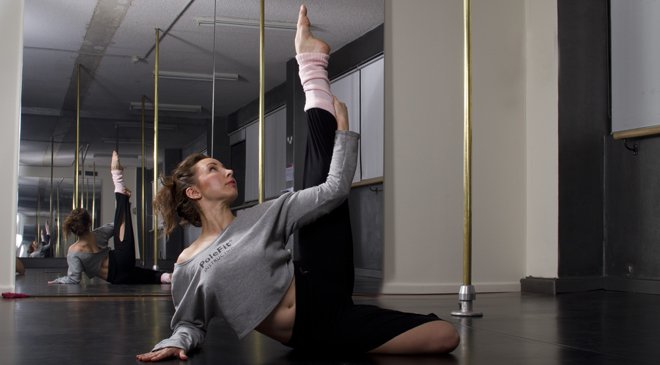
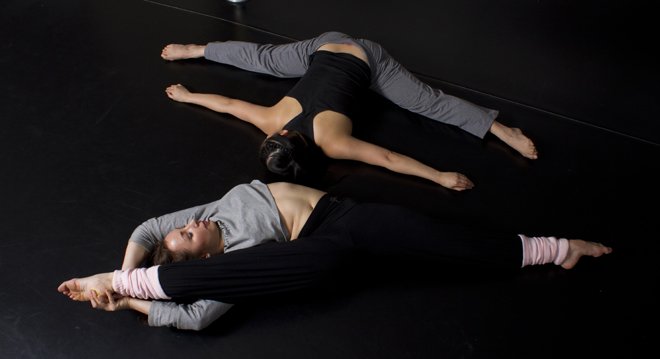
Stretch classes for pole dancers are available at Studio Verve Dance Fitness, Sydney

Increasing one’s flexibility is not usually a focus for people looking to improve their fitness levels but the importance of stretching should not be underestimated. The thought of ‘stretching’ can be a daunting idea especially for the absolute beginner for example where does one start, what does one do and for how long are often the questions milling  around our heads.


In a regular 1 hour exercise session, the total stretching time normally lasts for about 5 minutes. This is usually because it is part of a warm up routine designed to prepare the body for the activity that follows. The intention is to increase your heart, raise your core body temperature and lubricate your joints for easier mobility.
Stretching to warm up our body for action and stretching to specifically increase our general flexibility are two very different things. To increase flexibility takes time and care, and cannot be achieved from 5 minutes of stretching during a class warm-up.

DID YOU KNOW THERE ARE DIFFERENT STRETCHING TECHNIQUES?
The four major types of stretches are:
1. Static Stretching: The Static stretch is used most often; this involves stretching a particular muscle or group of muscles by slowly moving the body into position and then holding the stretch for a set amount of time.
2. PNF:  Proprioceptive Neuromuscular Facilitation (PNF) is a more advanced form of flexibility training that involves both the stretching and contraction of the muscle group being targeted. PNF stretching was originally developed as a form of rehabilitation, and to that effect is very effective. It is also excellent for targeting specific muscle groups, and as well as increasing flexibility it also improves muscular strength.
3. Dynamic Stretching:   Dynamic stretching means a stretch is performed by moving through a challenging but comfortable range of motion repeatedly, usually 10 to 12 times. Dynamic stretching requires more thoughtful coordination than static stretching because of the movement involved. Dynamic stretching is controlled, smooth, and deliberate and should not be confused with old-fashioned Ballistic stretching.
4. Active Stretching:  Active stretching means you’re lengthening a muscle by actively contracting the muscle in opposition to the one you’re stretching. This method requires you to relax the muscle you’re trying to stretch and rely on the opposing muscle to initiate the stretch. Active stretching can be challenging because of the muscular force required to generate the stretch but is generally considered lower risk because you are controlling the stretch force with your own strength rather than an external force.

HOW OFTEN, HOW LONG AND WHEN SHOULD I NOTICE A DIFFERENCE?
Consistency is key here! You should incorporate only two to four heavier stretching sessions in each week and have a lighter stretching day in between each of the heavier days.
Studies have found that range of motion can be increased by a single 15-30 seconds stretch for each muscle group per day.
Physical changes will become noticeable between four to eight weeks. The long-term effects of stretching towards increased range of motion show that after 6 weeks, people who stretched for 30 seconds per muscle each day increased their range of motion much more than those who stretched for 15 seconds per day.

Stretch classes for pole dancers are available at Studio Verve Dance Fitness, Sydney

SOME USEFUL TIPS TO CONSIDER WHEN STRETCHING
Breathe
Never hold your breath! This will only tense your muscles and inadvertently counteract what you are trying to achieve. Take deep, steady inhales and exhales.
Alignment
If you can’t feel the stretch then there’s a good chance you may not be in the ideal alignment. A slight adjustment and boom you’ve found the sweet spot!
Relax
It’s so easy to tense up, particularly when you’re trying to avoid pain but you need to relax to get the most out of your stretch session.
Steady and gradual does it
Respect your body! Focus on the benefits of stretching rather than taking a no pain, no gain approach. This will make your practice more enjoyable and almost meditative. Know your limits, be mindful of pre-existing injuries and ask if you’re unsure of anything. With passion, commitment and safe practice, you’ll increase your flexibility in no time.

If you're super brand new to stretching, maybe attending a stretch class would be beneficial for you. Yoga is a great way for beginners to start out with stretching, or you could attend a dedicated stretch class. Many dance schools have them (including Studio Verve!) and a lot of the time you can take stretch classes independent of being a dance student.

How often do you stretch? Are you habitual with it or is it something you need to work on?

post signature

Twitter | Youtube | Instagram | Pinterest | Bloglovin
SHARE:

Friday, March 7, 2014

Fit Fridays: My 6 Favourite Yoga Poses

In the past year I've really started getting into yoga, and started practicing stretching so much more than I previously was (although I'm still not doing it nearly enough for the level of flexibility that I want)

What I love about yoga is that you can do it at home, in a class, with a DVD...there are so many options available to you! I also love that it's not competitive and it teaches me things. Like patience. Because when you're trying to hold 'plank pose' for 3 minutes, you start learning a lot about patience. I get incredibly frustrated with stretching, because I am really inflexible from years of running without stretching. But I like that in yoga you can see little improvements every time you practice, and for me, that's enough to keep me going.

Anyway, I am still pretty new at it, I'm not a super yogi. But I thought I would share my favourite poses with you. Someone who has been practicing at years might be more flexible in these poses, but that's okay. I also like that yoga can be adapted for every body.
Okay, here we go. My favourites, in no particular order:
(btw I'm not going to pretend to know the proper names for these poses)


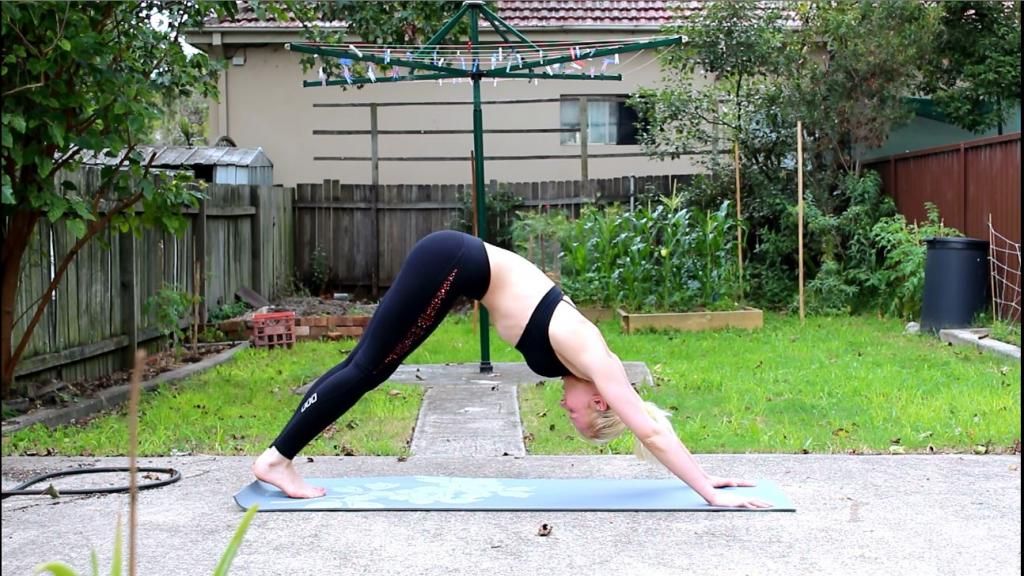
Downward dog: I used to do this pose wrong. I focussed so much on pushing the backs of my legs to the floor that I was missing the wonderful shoulder stretch you get out of this one. This pose is adaptable depending on which areas you want to focus on: for a stronger stretch in the arms, bend your knees a little. For a stronger stretch in the back of each calf, peddle the legs gently. You also built a bit of strength in your shoulders as you push the floor away. I used to hate down dog, but it's now one of my favourite poses. Strength and flexy training? Check!


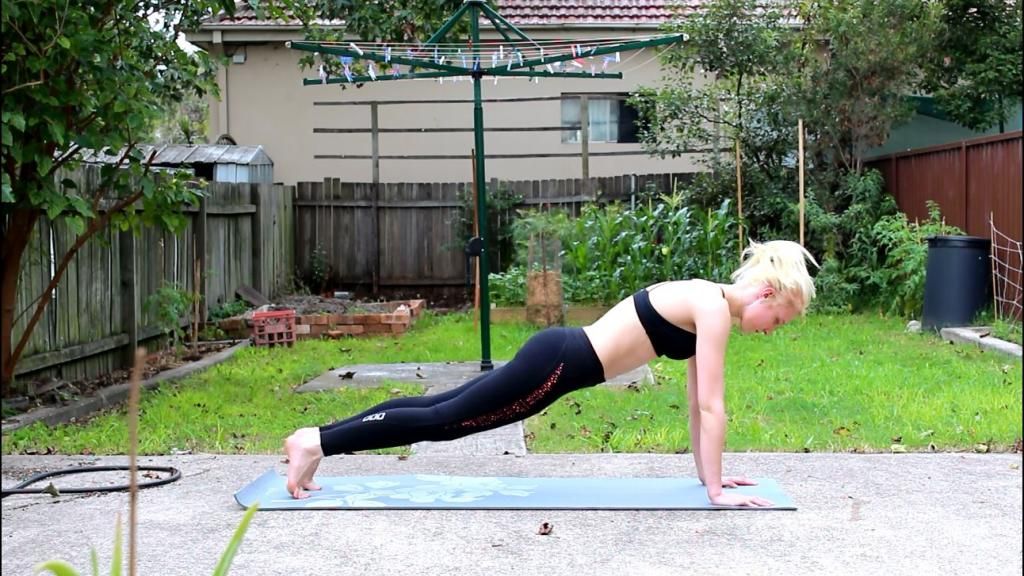
Plank pose: Plank pose is an all-over strength builder. This is part of the sun salutation sequence (which let's be honest, is probably the only real sequence I will do unless given guidance on others). This pose is basic and almost anyone can do it, even if only for a few seconds. I just love this one because every muscle is engaged to hold you straight.


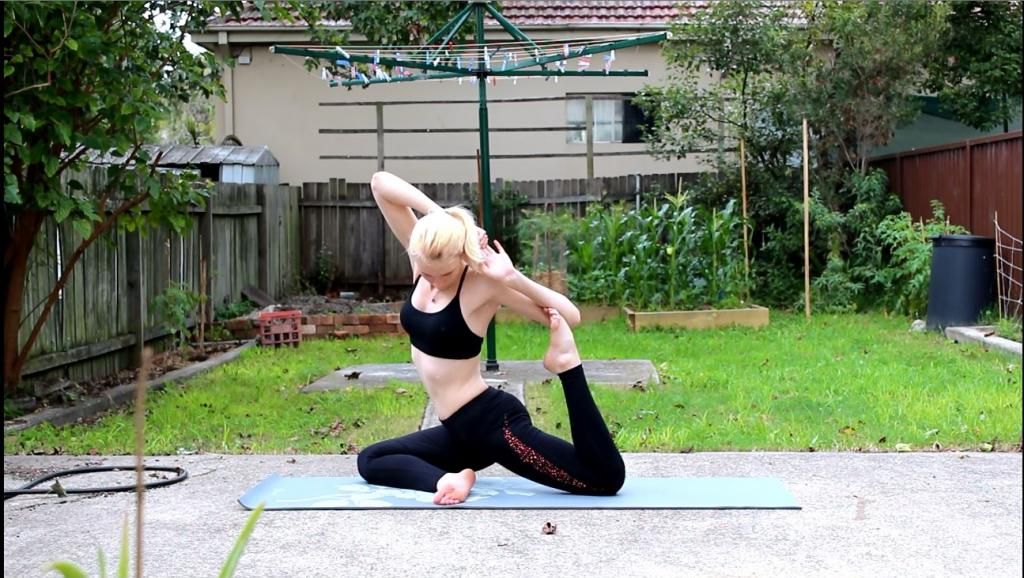
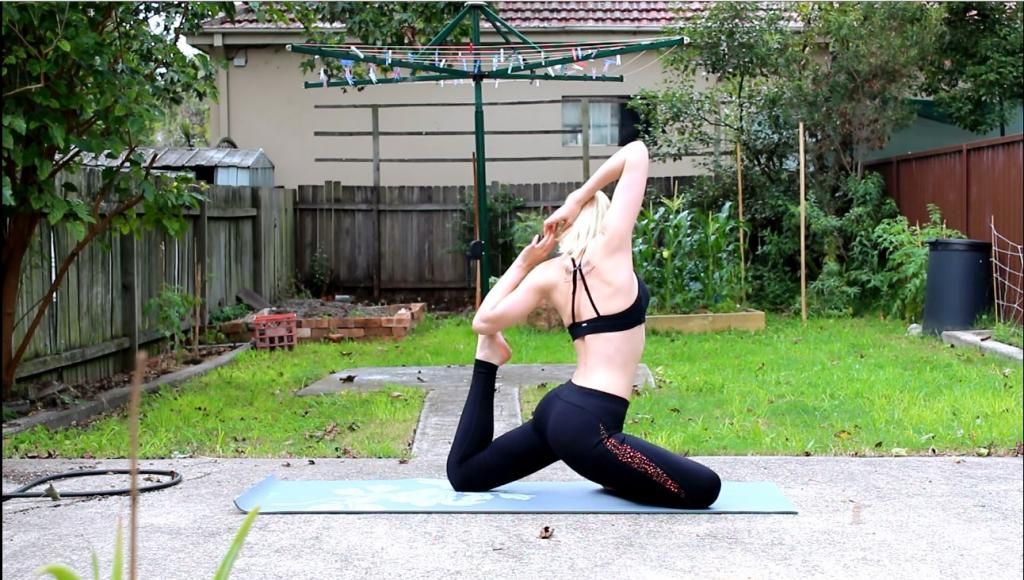
One-Legged King Pigeon Pose: This is another awesome pose because it stretches so many different areas of the body. You can also get a glimpse of just how inflexible I am! This one has a little side stretch (or a backbend if you can do the advanced pose) and is also a hip and chest opener. Once upon a time (okay, only a few months ago) I didn't even have the hip flexibility to stretch my arms above my head. But that's what yoga is! Little improvements, all the time. If you're a beginner you can practice this with just the legs. The back leg stays straight behind you as you try to keep that front leg parallel to your body (although that is super advanced). I love this pose and could relax in it for ages!


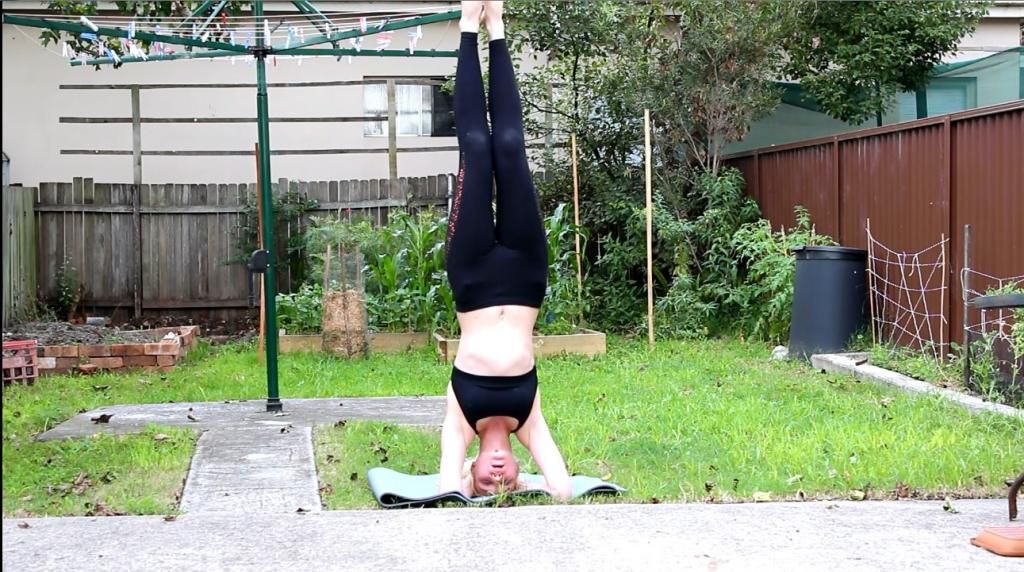
Headstand: This is a supported headstand, because the grass under me was quite uneven. I also quite love tripod headstands. Again, this pose is an all-over strengthener. It strengthens your shoulders, arms and your core as you stay upright. Your core is what keeps your heads straight above you, so this is a big core workout. There's also a heap of yoga literature about it increasing blood flow to the head and draining fluid from the feet. And it looks awesome.


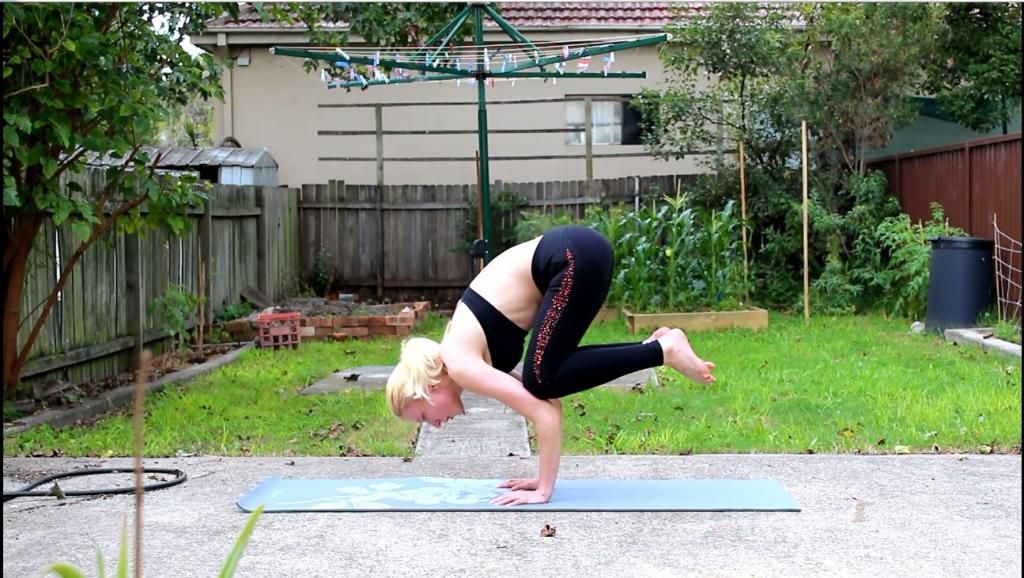
Crow pose: Crow is a new one to my yoga repertoire, and one that I have spent quite a number of weeks working on. This balancing posture strengthens your arms, shoulders, wrists and core. It also takes a surprising amount of mental clarity to reach it. And by that, I mean you kind of have to focus on what you're doing to get there. Which is incredibly humbling.


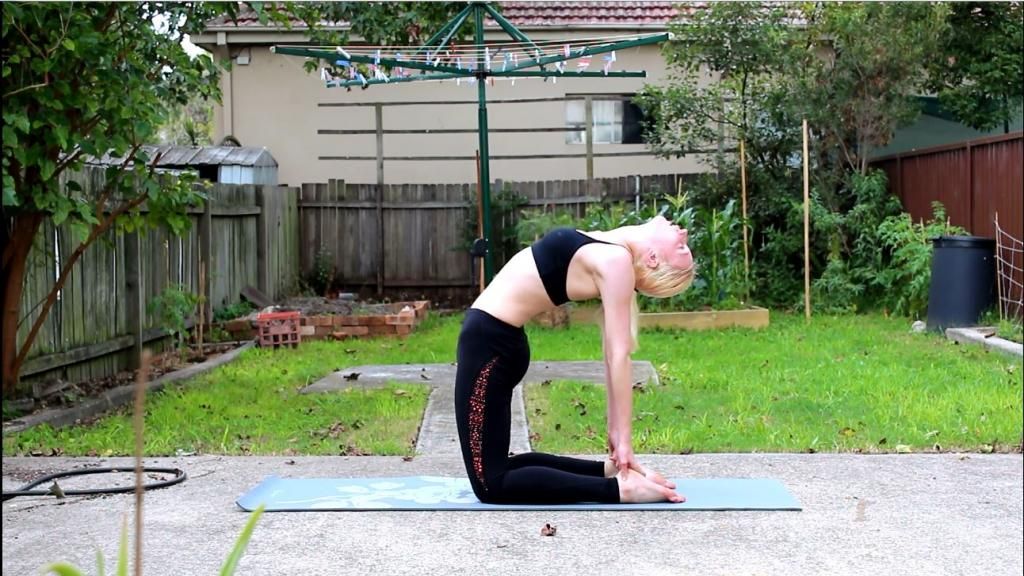
Camel Pose: I've shown you a few poses that are over-all strength builders, but this one is an over-all stretcher. I started this one as a precursor to some more serious back-bending and was surprised at how difficult it actually is. This is a pose that takes a lot of focus and trust in your body. I would recommend doing it with a teacher first though, because it is very easy to get it wrong.

That's it! My favourite poses! Do you practice yoga? Are any of these your favourites or do you have others that you love? Let me know!

post signature

Twitter | Youtube | Instagram | Pinterest | Bloglovin
SHARE:
© Where is my mind?. All rights reserved.
Blogger Template by pipdig